Okay, so check this out—seed phrases have been the default for years. They’re simple on paper: write down 12 or 24 words, store them somewhere safe, and presto, you can recover your keys. Sounds decent. But wow — in practice it’s a mess. People lose them, copy them poorly, or store them in photos. Scams and social engineering prey on that exact human weakness. My instinct said: there has to be a better way. And there is. Sort of.
At a high level, a seed phrase is just a human-readable backup for a private key. It’s powerful, but fragile. Short version: hardware-backed smart cards store private keys inside a secure element so the key never leaves the device. That eliminates the need to memorize or paper-print a phrase that anyone could steal. For people who want to carry crypto like a wallet in their pocket, smart-card approaches are compelling—convenient and more resilient to casual loss. I’m biased, but this part excites me.
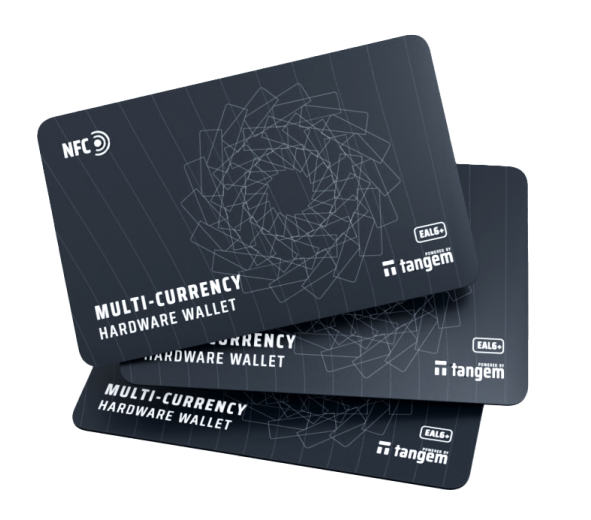
How smart-card wallets change the game (and the catch)
Initially I thought they’d be a silver bullet. But then I realized there’s tradeoffs. Smart cards (and similar NFC/secure-element devices) keep the private key inside hardware and sign transactions without exposing the key. That’s the core advantage: no seed phrase to accidentally leak. These devices pair with mobile apps for UX, letting users approve transactions on their phone while the card does the math. It’s fast, slick, and feels modern—like using Apple Pay but for crypto.
On the other hand, what happens if the card is destroyed, lost, or fails? You need a recovery plan. Some smart-card vendors provide a factory-backed method or a way to provision multiple cards from the same root key. Others use social or distributed recovery. There’s no single right answer. On one hand, fewer words to memorize is great. On the other, replacing a seed phrase with a single physical token concentrates risk.
Here’s the thing. The best real-world setups mix approaches: hardware-backed keys plus a robust, redundant recovery plan. Redundancy matters. I once saw a user store their only backup card in a toolbox (yep, near the wrench). Not smart. But also not rare. Humans are predictably sloppy when they think “it’s secure now.” So design for human error.
Practical security: mobile apps, UX, and threat models
Mobile apps are the glue. They display the transaction details, let you tweak gas fees, and tell the card to sign. The secure element never exposes the private key—only signatures leave. This significantly reduces risk from malware on your phone. Still, a compromised app or a man-in-the-middle UI attack can trick you into approving bad transactions if you aren’t checking details. Seriously? Yep. People skim confirmations all the time.
Threat modeling helps. If your biggest worry is remote attackers (phishing, malware), a smart-card plus an isolated mobile app is a huge win. If you’re worried about physical coercion or state-level threats, you might want multi-signature or air-gapped backups. On the flip side, if you need to recover funds without the original vendor, ensure your chosen smart-card solution supports that—because vendor-locked recovery can be a single point of failure.
Also: convenience is security. If a solution is too clunky, users will write down PINs on sticky notes or snap photos—then you’ve gained nothing. The user experience needs to be seamless enough that people actually use secure practices instead of bypassing them. Balance matters.
Why I recommend checking out tangem
If you’re exploring physical smart-card options, look at tangem. I’ve tested devices that store keys in secure elements and sign via NFC with no key export. The pairing with mobile apps is straightforward, and tangem’s approach to factory-provisioned cards gives a familiar “tap-and-go” UX which many users prefer over fiddly seed words. Their product philosophy is clearly aimed at everyday users who want something tangible—no scribbles, no weird recovery rituals—just a card. Check it out: tangem.
Now, caveats. If you go tangem or something similar, read the recovery options carefully. Some setups let you duplicate cards at provisioning time to create a backup pair. Others employ multi-device schemes. If you lose access to all factory-provisioned backups, your funds could be gone—so don’t skip this planning step. I’m not 100% sure about every variant across vendors, but the core principle is universal: plan for failure.
Oh, and a quick practical tip: buy extra cards, provision them together, and store them in separate, secure locations. One at a bank safe deposit box, one with a trusted lawyer or family member, one in a home safe. Sounds old-school, but it works. Humans are involved. Humans make mistakes. Accept it.
Advanced options: multisig, distributed recovery, and UX tradeoffs
Multisig is underrated. You can distribute signing power across several smart cards or combine hardware wallets with custodian services. That reduces single-point-of-failure risk and makes coercion attacks harder. But multisig complicates UX: more approvals, more devices, and possible higher fees. Sometimes simpler beats theoretically perfect security—especially for average users.
Distributed Recovery Services (DRS) and threshold cryptography are getting better. They split secrets across multiple parties so no one entity holds the full key. Cool, right? But these systems often rely on third-party services and novel cryptography, so trust and composability vary. My advice: if you’re not comfortable auditing a complex scheme, stick to well-audited, battle-tested patterns.
Common questions
Can I ditch my seed phrase entirely?
Yes, in many cases. Smart-card solutions can eliminate the need for a seed phrase, but you must implement strong recovery practices. If you trade seed phrases for a single device without backups, you’ve swapped one weak point for another.
Is a smart-card wallet safe from phone malware?
Mostly. Because the private key never leaves the secure element, phone malware can’t directly exfiltrate it. However, malware can try to deceive you about transaction details, so always verify amounts and recipient addresses on the app or device display if available.
What should a cautious user do today?
Buy a reputable hardware-backed smart-card, provision at least one backup card during setup, and store backups in separate secure locations. Consider multisig if you hold significant funds. Finally, practice the recovery process once—don’t assume it’ll work when panic hits.
To wrap—well, not wrap exactly—this is a shift, not a revolution. Seed phrases won’t vanish overnight, but smart-card alternatives solve real usability and security problems for many users. There’s no perfect answer. On one hand, hardware-backed keys reduce remote attack surfaces; on the other, physical loss and vendor choices introduce new risks. I like practical redundancy: multiple cards, clear recovery plans, and simple rituals you can actually follow. That wins more often than perfection ever will. Somethin’ to think about…
